TikTok’s Censorship Crisis: What Just Happened?
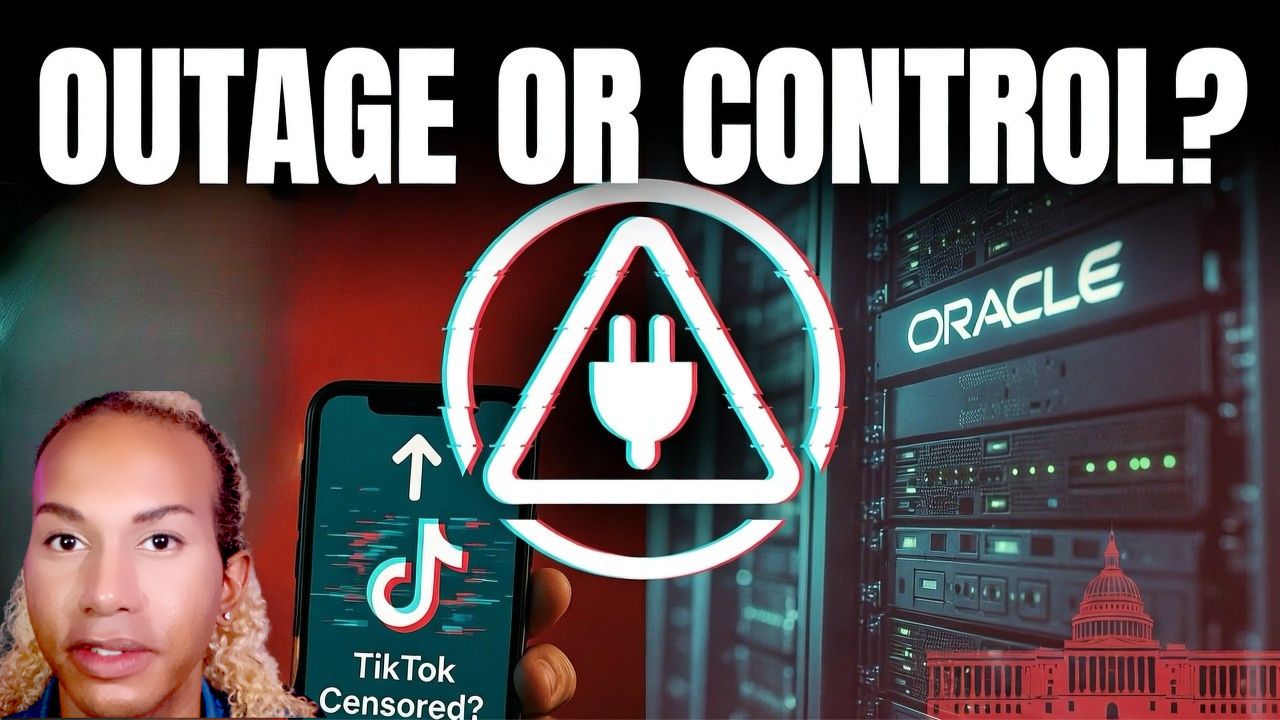
Within days of TikTok’s U.S. operations shifting into a joint venture backed by Oracle and Trump-aligned investors, users started reporting something alarming: videos criticizing ICE would not upload, even though normal content worked fine. At the same time, messages containing words like “Epstein” allegedly began failing to send, while other direct messages went through without issues. TikTok’s public explanation was simple and technical—a power outage at a U.S. data center supposedly caused temporary upload problems.
For creators on the ground, that story did not match what they were seeing. Anti-ICE videos repeatedly errored out while unrelated posts uploaded normally, and the pattern lined up almost perfectly with outrage over a fatal ICE shooting in Minneapolis. When infrastructure glitches seem to affect only certain political topics, people naturally stop believing in coincidence.
Who’s Really in Charge of U.S. TikTok Now?
Under the new structure, Oracle hosts U.S. TikTok data in what it calls a secure U.S. cloud environment, and the joint venture—including investors close to Donald Trump—has significant influence over how the platform is governed. That means the physical servers, databases, and content pipelines for American users now run on Oracle’s infrastructure, not on ByteDance-controlled systems overseas.
At the same time, the Trump administration has ramped up aggressive ICE enforcement, creating a highly charged political backdrop. From the outside, it now looks like this: a platform used heavily by young, politically engaged users is suddenly controlled by companies and investors aligned with the very administration being criticized. When critical content then runs into mysterious “technical issues,” trust evaporates quickly.
The Pattern Creators Saw on the Ground
High-profile creators, including comedian Megan Stalter, reported that videos criticizing ICE simply would not upload no matter how many times they tried. In some cases, they deleted their TikTok accounts entirely and announced the move publicly, telling followers to find them on other platforms instead. Smaller creators echoed similar experiences, pointing to repeated failures only on posts with certain hashtags or phrases.
Users also shared screenshots suggesting that messages containing specific keywords—most notably “Epstein”—were failing to send, even while ordinary chats worked. From a technical perspective, that is exactly what you would expect to see if automated moderation systems or keyword filters were silently blocking certain categories of speech while leaving the rest untouched. Whether those filters misfired during a real outage or were dialed in more intentionally is the part nobody outside TikTok and Oracle can verify.
Infrastructure as a Tool of Control
This situation is a live case study in the idea that infrastructure equals control. Oracle’s cloud now hosts U.S. TikTok data and handles the pipelines that decide which uploads are accepted, queued, scanned, or rejected. If something in that stack decides a video should not go through—whether because of an error, a misconfigured AI model, or a deliberate rule—the user sees only a generic failure message.
Modern social platforms rely heavily on AI moderation tools that use keyword filters, sentiment analysis, and pattern detection to decide what content is risky. It is entirely plausible for such systems to “accidentally” clamp down on specific political phrases when models are tuned aggressively, but those same tools can also be configured to target certain topics with surgical precision while preserving plausible deniability. From the outside, both scenarios look like a glitch that only ever seems to hit a particular kind of speech.
Who Gains, Who Loses?
If the pattern of blocked uploads was intentional, the beneficiaries are obvious. Suppressing criticism of ICE at the peak of public outrage blunts online organizing and discussion, and blaming it on a data-center power issue gives the platform and its new owners a ready-made cover story. Even subtle throttling can create a chilling effect, making users think twice before posting more critical content.
Users and creators lose either way. If this was deliberate censorship, their speech is being filtered before it ever reaches an audience. If it was truly a technical failure, the timing and selectivity still destroy trust, and many people will respond by self-censoring or leaving the platform entirely. Competitors like Instagram Reels and YouTube Shorts stand to gain as creators redirect their audiences to spaces they perceive as less compromised, and smaller TikTok-like apps have already seen a bump in downloads as users hedge their bets.
Short-Term Fallout and Political Pressure
Early data points to a sharp spike in TikTok uninstalls—on the order of one-and-a-half times the normal daily rate—as users delete the app rather than wait for an official explanation. Public account deletions by well-known creators amplify that trend, signaling to followers that the platform is no longer trustworthy for sensitive or political content.
On Capitol Hill, lawmakers like Senator Chris Murphy have framed the alleged suppression of ICE criticism as a serious threat to democratic discourse. That kind of language increases the pressure for TikTok and Oracle to offer more transparency, whether in the form of technical postmortems, independent audits, or detailed moderation reports. At the same time, both companies have every incentive to keep the inner workings of their AI moderation and infrastructure stack as opaque as possible.
Longer-Term Scenarios for Trust and Speech
If this really was just a messy, badly timed technical failure, TikTok still faces a trust death spiral. Under a Trump-linked ownership structure, many users will interpret any future glitch around sensitive topics as deliberate suppression, making the platform effectively unusable for political speech even if engineers are acting in good faith. Every outage becomes “proof” of a hidden agenda.
If, on the other hand, the pattern reflects intentional censorship, then TikTok has become one of the most sophisticated content control systems ever deployed on a major U.S. platform. By combining Oracle’s cloud infrastructure, AI-powered moderation, and the cover of “data center issues,” it would be possible to quietly shape which criticisms are heard and which disappear at scale. Either way, the episode reinforces a harsh reality: whoever controls the servers ultimately controls the speech.
Key Takeaway
TikTok says “power outage,” and thousands of users say “censorship.” At this point, the exact technical truth may matter less than the collapse of trust. Once people believe the pipes are biased, every glitch feels like a cover-up and every “temporary issue” looks like a deliberate choice.
The deeper lesson is simple: in the cloud era, the company that hosts your data effectively controls what you are allowed to say. Right now, U.S. TikTok’s data and moderation stack sit on Oracle’s infrastructure under a Trump-aligned ownership structure, in the middle of an aggressive ICE crackdown. Whether that alignment is coincidence or power play, the effect is the same—people who no longer trust the platform are voting with their thumbs and leaving.




.jpg)








.jpg)