Apple’s Siri Just Got Google’s Brain: What Gemini Really Means for Your iPhone
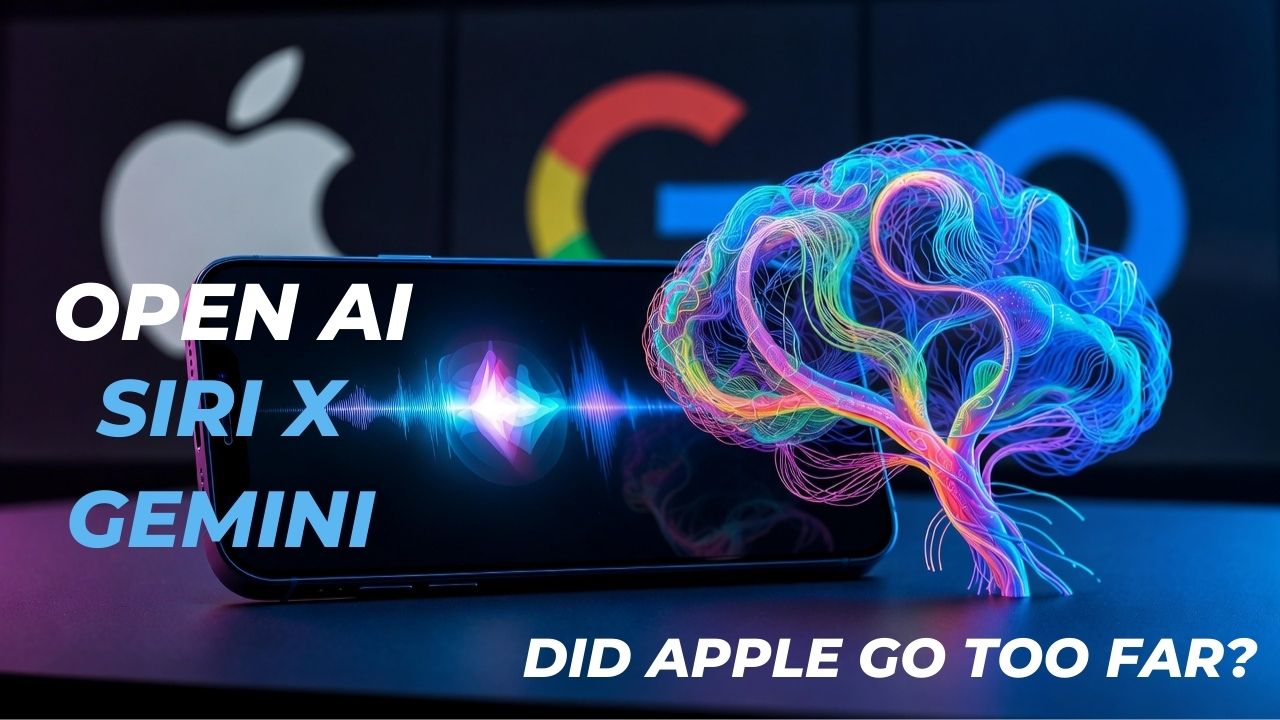
Apple has finally made a massive AI move, and it didn’t come from an Apple keynote or WWDC unveiling. Instead, via investor facing outlets like CNBC, Apple confirmed that its new, smarter Siri and upcoming Apple Intelligence features will be powered by Google’s Gemini AI models running on Apple’s own infrastructure.
This is a big deal. For years, Apple has positioned itself as the company that does everything in house, while Siri lagged behind Alexa, Google Assistant, and now chatbots like ChatGPT and Gemini. Partnering with Google for the next generation of Siri is a clear signal that Apple is changing tactics to stay relevant in the AI race.
What Apple and Google Actually Announced
Apple signed a multi year partnership that makes Google’s Gemini models the backbone for its next wave of AI features, including a major Siri upgrade coming later this year. Rather than simply slapping Gemini on top of Siri, Google is reportedly building a custom 1.2 trillion parameter Gemini model tailored for Apple’s needs.
Previous reporting suggested Apple would pay around 1 billion dollars per year for this access, covering both the models and the cloud technology that supports them. That is a huge check to write to a direct competitor, unless the alternative is shipping a weak Siri upgrade that disappoints users and investors.
Why Apple Is Doing This Now
Apple’s timing is not an accident. Over the past year, the company has faced heavy criticism for falling behind in AI while rivals like OpenAI, Google, Microsoft, and even Meta shipped visible, headline grabbing AI features. Apple announced Apple Intelligence and a new Siri experience in 2024, but quietly pushed the full Siri upgrade into 2026, acknowledging it needed more time.
At the same time, Wall Street has rewarded companies that leaned hardest into AI, driving record highs for Nvidia, Microsoft, and Alphabet. By embracing Gemini, Apple can finally tell investors that it has a credible, scalable AI strategy without trying to build everything from scratch. Analysts say this arrangement lets Apple focus on the experience layer, how AI feels inside iOS and macOS, while Google provides the heavy duty model horsepower in the background.
What Changes for Everyday iPhone Users
For regular iPhone users, the headline is simple: Siri should finally get smarter. With Gemini behind the scenes, Siri is expected to handle:
- More natural, context aware conversations.
- Complex requests like summarising long threads or emails.
- Planning and multi step tasks that today’s Siri often fumbles.
Apple’s own models will still handle simpler, on device tasks, but for heavier work, summaries, planning, and open ended queries, Siri will call out to Gemini powered Apple Foundation Models running in the background. The goal is to move Siri away from “Here’s what I found on the web” and toward actual, AI quality answers that feel integrated into the OS rather than bolted on as a chatbot.
Privacy: Who Sees Your Siri Data?
Whenever Google and Apple are mentioned in the same sentence, one concern immediately pops up: privacy. Apple is trying to get out in front of this. In its messaging, Apple stresses that these Gemini based models will run either on device or on Apple’s own Private Cloud Compute servers, not directly on Google’s public infrastructure.
In practice, that means Apple is licensing the technology, the model architecture and training, but still mediating access to your data. Your Siri prompts should be processed within Apple controlled environments, where the company can apply its own privacy policies and technical safeguards. Google does not simply plug into your raw Siri history the way it would if you were using a standalone Gemini app.
Of course, how much you trust this depends on how much you trust Apple’s implementation and its definition of private. But structurally, this setup is very different from sending every Siri request straight to Google’s consumer Gemini service.
Where Does This Leave ChatGPT and OpenAI?
This deal also raises questions about Apple’s relationship with OpenAI. Apple has already announced that some Apple Intelligence features will be able to hand off certain queries to ChatGPT, via a separate partnership. With Google now powering a dedicated, custom Gemini model for Apple, it’s unclear how long that three way setup, Apple’s own models, Google’s Gemini, and OpenAI’s ChatGPT, will last.
For now, Apple says nothing about the OpenAI deal is changing. But Gemini’s deeper integration clearly shifts the centre of gravity toward Google, especially if Gemini ends up handling most of the heavy lifting behind the new Siri experience.
Did Apple Just “Give Up” on Building Its Own AI?
Some people will see this as Apple admitting defeat in the AI race. The reality is more nuanced. Apple is still building its own models, still controlling the user experience, and still running everything in environments it manages. What it has effectively admitted is that, for now, Google’s models are ahead in the ways that matter most for a mainstream Siri upgrade.
A useful analogy: Google is becoming the engine supplier, while Apple continues to design the car, interior, and driving experience. As long as Siri finally feels useful, after years of lagging, it’s likely most users will see this as a win, even if some purists are uneasy about Google touching anything in the Apple ecosystem.
The Bottom Line
Apple’s decision to let Google’s Gemini power the next generation of Siri is one of the most significant strategic shifts the company has made in years. It signals urgency, realism, and a willingness to license the best available AI rather than pretend that in house efforts can instantly match what Google and OpenAI have been building for years.
For iPhone users, this could finally deliver the smart, context aware assistant Apple has been promising since the early days of Siri. For the industry, it’s a sign that even the most closed, vertically integrated company in tech is willing to cooperate when the stakes are high enough.
What do you think? Are you comfortable with Google’s Gemini quietly powering your Apple exclusive assistant if it means better features, or does that cross a line for you in terms of trust and ecosystem purity?




.jpg)








.jpg)