OpenAI’s $60 ChatGPT Ads: What Just Happened?
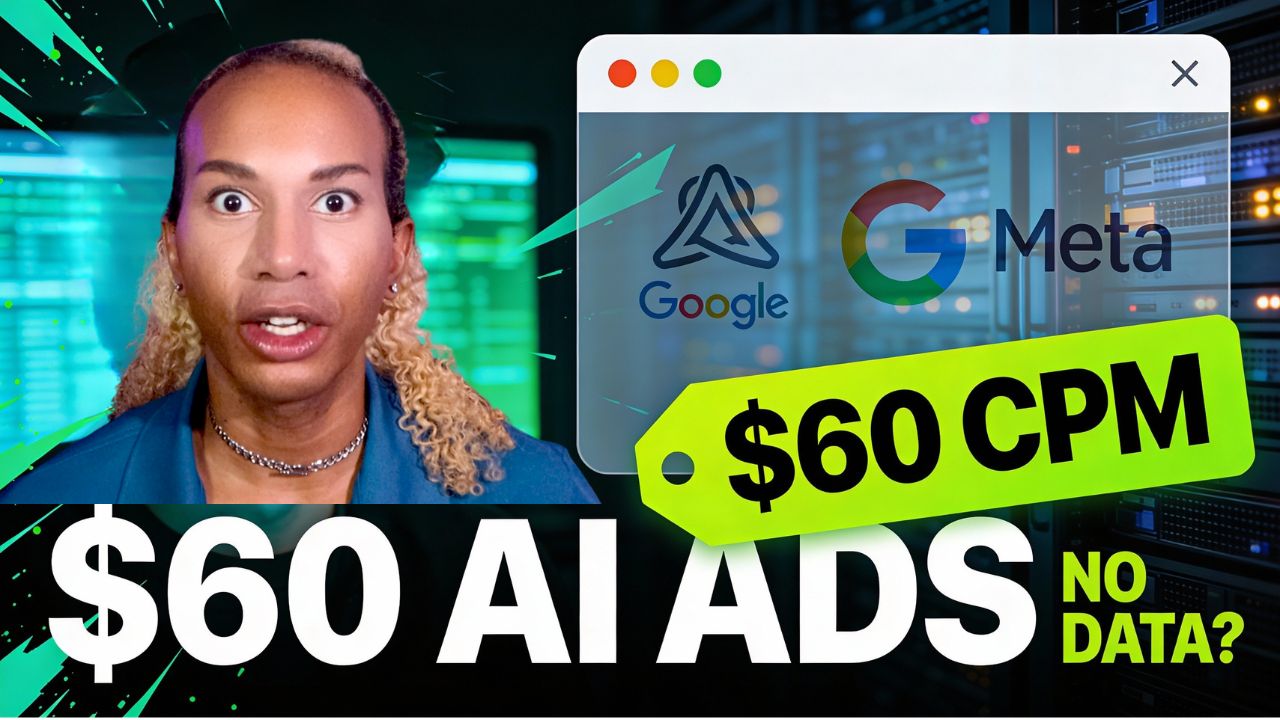
OpenAI is rolling out ads in the free version of ChatGPT and pricing them like they are Super Bowl inventory. Brands are being quoted around 60 dollars CPM for placements inside AI conversations, which puts ChatGPT on par with live NFL broadcasts and roughly three times the rates many advertisers see on Meta’s platforms.
For now, paid ChatGPT subscribers stay ad-free, but the free tier is about to turn into a new kind of premium ad real estate. The strange part is that advertisers only get basic metrics like impressions and clicks. There is no conversion tracking, no purchase data, and no cross-site attribution of the kind that Google and Meta ad buyers are used to.
The Concierge: How ChatGPT Ads Actually Look
To understand why OpenAI thinks it can charge so much, imagine ChatGPT as a high-end concierge sitting between you and the internet. You type a question like “Plan a three-day trip to Miami with good food and a hotel under 250 dollars a night,” and ChatGPT returns an itinerary that blends organic suggestions with one or two sponsored options.
From the user’s perspective, it still feels like a conversation with a helpful assistant. From the advertiser’s perspective, they are stepping into a moment of high intent, where someone is clearly ready to plan, compare, and buy. That “intent window” is what OpenAI is selling, and it is a big part of why they believe 60-dollar CPMs are defensible even without granular performance data.
Why Advertisers Are Curious but Nervous
Advertisers have been chasing intent for decades. Search ads work because people literally tell Google what they want. Social ads work because platforms track interests, behavior, and social graphs. ChatGPT mixes the two: it captures detailed, real-time questions and preferences in a format that feels like a private conversation.
That is why brands are lining up small test budgets to try the new placements. They want to see whether an ad embedded inside a helpful answer can outperform a banner in a noisy feed. At the same time, the lack of conversion tracking and purchase data means these early campaigns look more like brand awareness plays than hardcore performance marketing. Paying 60 dollars CPM without knowing what happens after the click is a big ask.
The Compute Problem Behind the Ads
There is another reason OpenAI is pushing so hard into ads: compute is expensive. Running billions of ChatGPT queries every month costs on the order of hundreds of thousands of dollars per day in infrastructure and energy. Subscriptions and API revenue help, but they do not fully cover the bills for a global assistant that millions of people treat as a free utility.
If high-priced ads inside the free tier work, they give OpenAI a way to subsidize those users without hiking subscription costs or leaning even more on Microsoft’s capital. If they do not work, it will expose how hard it is to build an ad business on top of a service where each interaction is far more expensive than serving a cheap social post.
Who Wins, Who Loses, and Who Watches
OpenAI wins if brands decide that “attention plus intent” inside ChatGPT is worth the premium, even with limited reporting. In that scenario, the company proves that AI assistants can fund themselves partly through brand budgets, and it becomes easier to justify keeping a powerful free tier alive.
Advertisers stand to gain if these placements genuinely move the needle on awareness and consideration, but they are the ones paying NFL-level CPMs with only a handful of metrics to judge success. If all they see are clicks and views, they are flying blind compared to the dashboards they get from Google and Meta.
Google and Meta are watching closely. If OpenAI proves that AI prompts are a higher-value ad surface than social feeds, the incumbents will feel pressure to roll more ads into their own AI assistants and search-adjacent experiences. If OpenAI stumbles, they can lean into their existing pitch: rich data, robust attribution, and proven reach.
The Trust Question for Users
So far, most people think of ChatGPT as a tool that belongs to them, not as another ad channel. Sponsored answers risk changing that perception. If recommendations start to feel warped by money rather than usefulness, it becomes much easier for users to switch to assistants that market themselves as ad-light or ad-free.
That gives OpenAI a tricky balancing act. Push ads too hard and the free tier feels like a billboard. Hold back too much and the ad product may never scale enough to matter financially. Meanwhile, rivals like Anthropic can frame their own assistants as calmer, more neutral spaces to think.
What This Means for the Future of AI Ads
The bigger question behind OpenAI’s 60-dollar CPM experiments is whether an AI assistant can be run like a traditional ad-supported product at all. Inference costs are vastly higher than serving a social feed, and the most valuable ad moments happen inside private, context-heavy conversations that are harder to track without raising serious privacy and trust concerns.
If OpenAI makes this work, you can expect every major AI assistant to become some version of an ad platform, turning conversation into monetized inventory the way search and social were in the last era. If it fails, it will push the industry back toward enterprise deals, API usage, and subscription bundles as the main way to keep these tools alive.
Key Takeaway
OpenAI is betting that attention and intent inside ChatGPT are so valuable that brands will pay Super Bowl prices even without the data firehose they are used to. Advertisers are betting small, experimental budgets to find out if that is true. For users, the real decision is simpler: are ads inside your favorite AI assistant a fair trade for keeping it free, or are they the moment you close the tab and look for something that still feels like it is working for you, not for an ad buyer?


.jpg)





.jpg)