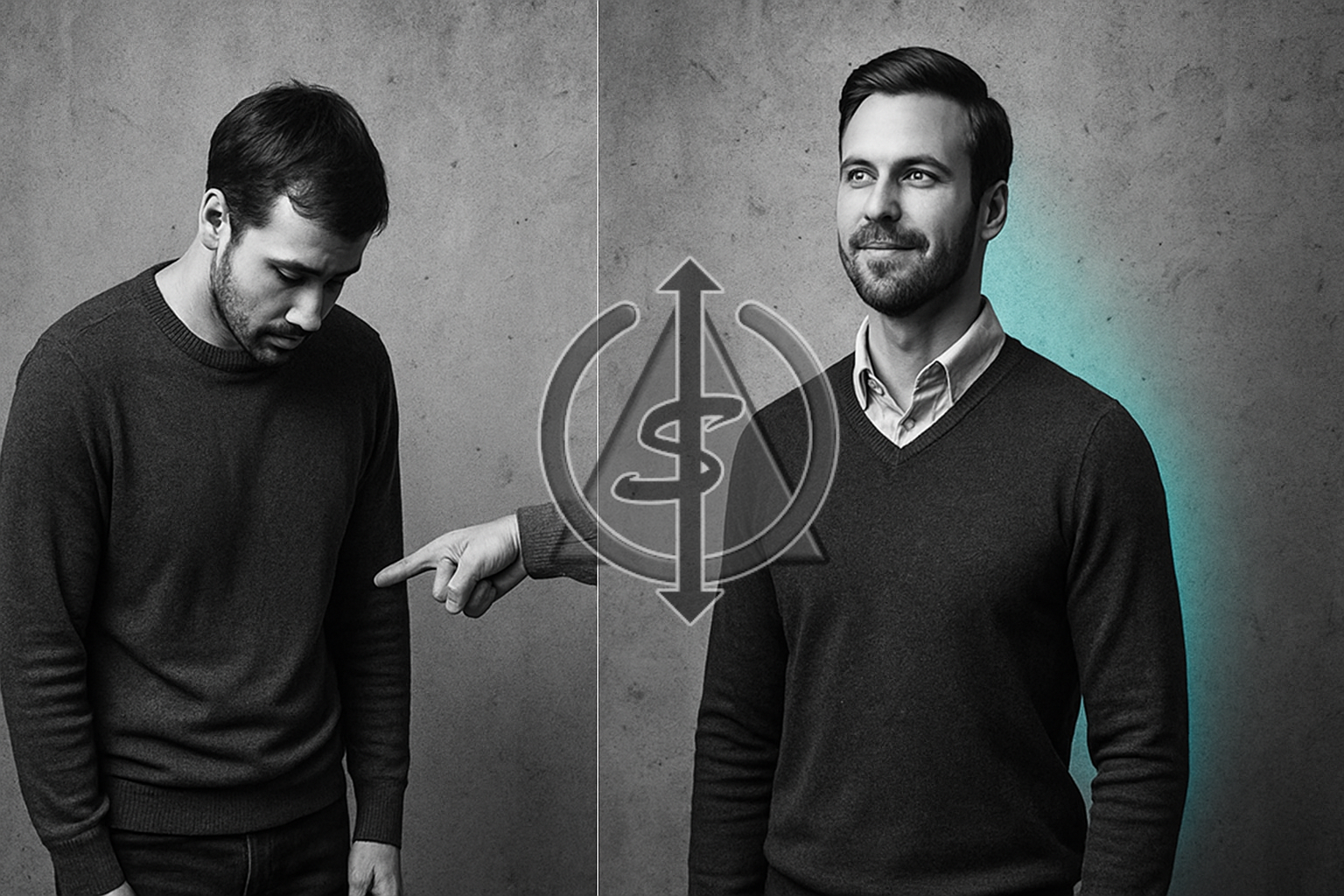
"Your healing does not start when you stop overreacting. It starts when you stop apologizing for how much you had to notice to stay safe."
You were not dramatic. You were alert. The same sensitivity you are trying to fix is the reason you made it through rooms that were never as safe as everyone pretended they were.
A lot of people secretly believe healing means becoming less sensitive. Crying less. Caring less. Not noticing as much. They think if they could just stop “overreacting,” they would finally be healthy. That belief completely ignores why their reactions got so big in the first place. You did not wake up one day and decide to be hyper aware. You learned to notice everything because, at some point, you had to.
Maybe you grew up in a house where the entire mood shifted when one person walked through the door. So you learned to scan their face, their footsteps, their tone, and adjust yourself accordingly. Maybe you had relationships where the rules kept changing, so you trained your nervous system to pick up the smallest signs of withdrawal or anger. Maybe you worked in environments where one mistake cost you safety or income, so your brain started treating every small detail like a potential threat. That vigilance was not an overreaction. It was protection.
When people tell you to “calm down” or “stop being so sensitive,” they are usually judging the behavior they see without any understanding of the conditions that created it. You start internalizing that message. You apologize for tearing up. You apologize for needing reassurance. You apologize for feeling anxious in situations that once were dangerous for you. You call yourself crazy when, in reality, your body is still responding to an old rule: if you miss something, you get hurt.
Healing does not begin with you forcing yourself to feel less. It begins with you telling the truth about why you feel this much. It sounds like: “Of course I scan the room. That used to keep me safe.” “Of course my heart races when someone raises their voice. That used to mean danger.” Naming the logic behind your reactions turns them from personal defects into understandable responses. From there, you can work with them instead of waging war against them.
Over time, healing looks less like shutting your emotions off and more like expanding your options. You still notice a tone shift, but you do not immediately assume disaster. You still register a silence, but you do not automatically abandon yourself to fix it. You feel the initial spike of panic, and instead of apologizing for it, you place a hand on your chest, breathe, and remind your body, “We are not back there anymore.”
You do not have to earn your healing by becoming less sensitive. Your sensitivity was never the enemy. It was your early warning system in a life that required early warnings. Healing starts when you stop apologizing for how much you had to notice to survive and start honoring that awareness as something you can now retrain, not erase.